
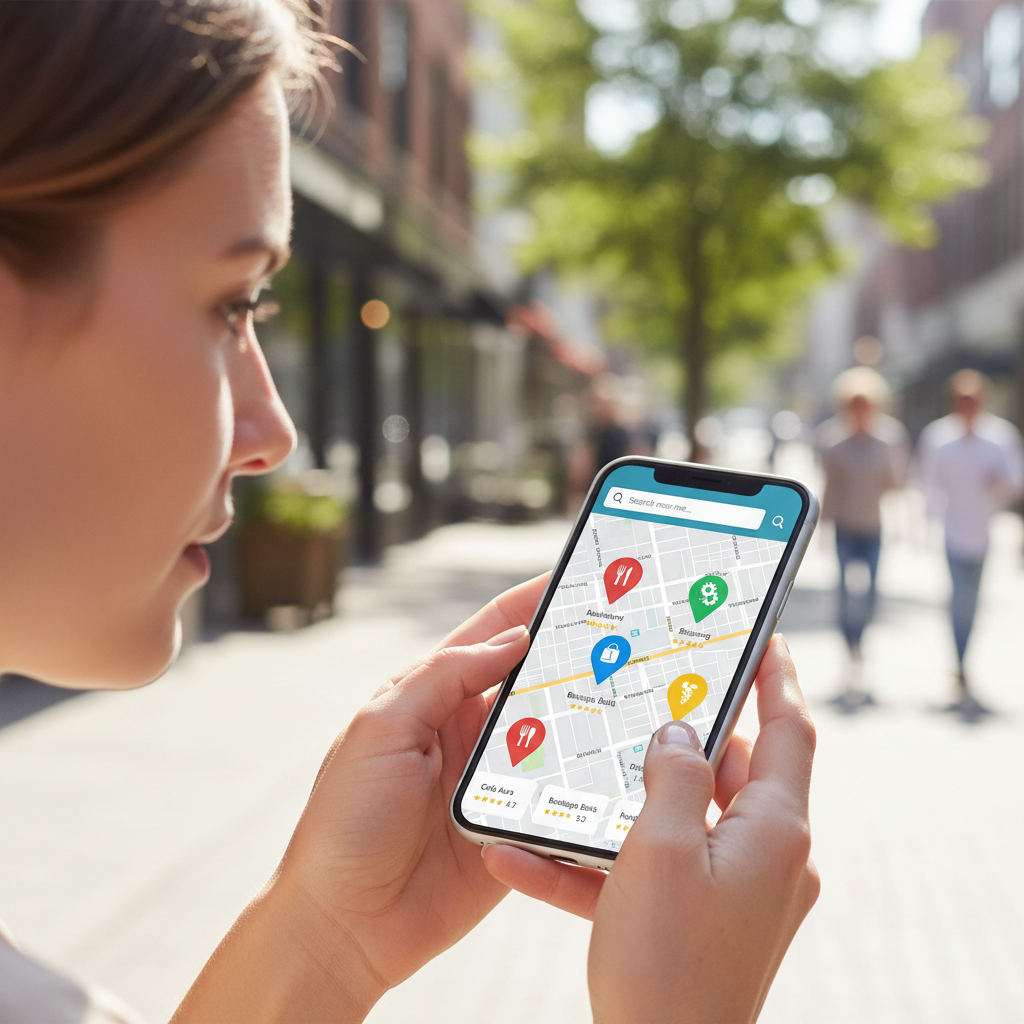
Yes, a website helps Google local ranking by providing essential data that establishes relevance and prominence for your business. It serves as a central hub for keywords and location information that Google uses to verify your authority; furthermore, it significantly increases your chances of appearing in the local Map Pack.
Many business owners feel frustrated when their Google Business Profile stays buried on page three of local results, even though they are located right next to their target customers. You might wonder if a website is still a requirement or merely an expensive digital business card. The reality is that your website serves as the primary data source for Google to verify your business relevance and authority; without a high performing site, your visibility in the Map Pack remains capped by a lack of technical context. In this guide, we will break down exactly how Google uses your web pages to determine local rankings. You will learn how to leverage technical factors like schema markup and mobile speed to climb the rankings and ensure your business becomes the top choice for nearby searchers.
Does a Website Help Google Local Ranking? The Short Answer for Small Businesses
When small business owners ask, does a website help google local ranking? the answer is a definitive yes. While your Google Business Profile (GBP) acts as the public face of your business on maps, your website is the engine that drives its performance. Google does not just take your profile's word for it; the algorithm crawls your website to verify that the services, location, and operating hours you claim are accurate and consistent.
Securing a spot in the Local Pack, the coveted top three results displayed on the map, requires more than just a verified profile. In the competitive South African market, many businesses neglect their digital footprint, relying solely on a basic map listing. By investing in professional website design, you provide Google with a massive relevance signal. Your website serves as a deep repository of information that reinforces your local authority. When Google sees a well-structured site that matches the data on your GBP, it gains the confidence to rank you higher than competitors who lack a formal web presence. For those starting out, affordable small business websites are often the missing link between being invisible and appearing exactly when a local customer searches for your services.
How Google Uses Your Website to Determine Local Relevance

Google evaluates your local ranking based on three core pillars: proximity, prominence, and relevance. While you cannot control how close a customer is to your physical office or store, you have total control over your relevance. Relevance refers to how accurately your business matches a specific search query. To determine this, Google’s crawlers act like digital investigators, cross-referencing the information on your Google Business Profile with the deeper context found on your website.
If your profile lists your business as a digital agency in Rustenburg, but your website lacks mentions of the North West province or specific local services, a disconnect occurs. This mismatch causes Google to lose confidence in your listing. When the algorithm is uncertain, it will always prioritize a competitor whose website explicitly confirms their local presence through consistent data. This is exactly why asking does a website help google local ranking is so important; it provides the verifiable proof the algorithm requires to trust your business's claims.
On-page content serves as the primary data source for this verification process. Your H1 tags, which are the main headings of your pages, should clearly state your service and location. A heading such as "Custom Web Development for Rustenburg Businesses" is far more effective for local SEO than a generic "Our Services" title. Beyond headings, localized service descriptions are vital. By detailing how you serve customers in specific neighborhoods or addressing local regional challenges, you provide the semantic clues Google needs to confidently match you with nearby searchers.
For many companies, professional website design is the most efficient way to ensure these technical elements are correctly mapped. When your site is structured to speak the same language as your map listing, you eliminate the guesswork for Google. If you are looking to build that bridge between your profile and your site, contact 014Digital today to discuss a localized strategy.
Prominence: Why a Strong Website Boosts Your Map Position
Google defines prominence as how well known a business is in both the physical and digital world. While reviews and ratings are a major part of this equation, your website acts as the central authority hub that validates your status. This is where the answer to does a website help google local ranking becomes a clear competitive advantage. Unlike a Google Business Profile, which is a relatively static listing, a website is a dynamic asset that allows you to build a network of digital endorsements known as backlinks.
Backlinks are links from other reputable websites pointing to your domain. When local organizations, such as the Rustenburg Chamber of Commerce and Industry (RCCI) or regional news outlets, link to your website, it serves as a powerful vote of confidence. Google interprets these local links as proof that your business is a legitimate, respected pillar of the community. A map profile alone cannot accumulate this type of sophisticated authority; it requires a destination to link to.
By hosting valuable content, localized case studies, or community resources, your site becomes a linkable asset. These signals of prominence directly influence your position in the Map Pack. If Google sees two businesses with similar services and proximity, it will almost always prioritize the one with the stronger digital footprint and more established local connections. Building this authority is a long term strategy that moves you beyond basic visibility. To start turning your site into an authority hub that commands respect from search algorithms, contact 014Digital today for expert guidance on local SEO and digital branding.
The Impact of Mobile Performance on Local Search Results

In South Africa, the vast majority of local searches occur on a smartphone. When someone in Rustenburg searches for a "plumber near me" or "emergency electrician," they are almost certainly on the move and relying on mobile data. This specific context is vital when considering the question, does a website help google local ranking? Google prioritizes mobile performance because its primary goal is to provide a seamless experience for these on-the-go users. If your site is sluggish or difficult to navigate on a small screen, Google will suppress your local ranking to prevent a poor user experience.
Local businesses must also consider South Africa's high data costs. A website weighed down by unoptimized images and bloated code does more than just load slowly; it consumes the user's expensive data. Fast-loading, lightweight sites perform significantly better in local search because they cater to the reality of the local infrastructure. Google tracks user behavior signals, such as how quickly a visitor bounces back to the search results after clicking your link. If a mobile user abandons your site because it is too heavy for their connection, your map position will suffer.
Investing in professional website design ensures your digital presence is built on a mobile-first foundation. This includes using responsive layouts and modern compression techniques to keep performance high. For growing companies, affordable small business websites provide the necessary technical edge to compete with larger brands in the Local Pack. If you are concerned about your site's mobile speed, contact 014Digital today for a performance audit tailored to local search requirements.
Structured Data and Local Schema: The Language Google Speaks
While content and speed are essential, there is a deeper layer where code talks directly to search engines. This is called Local Business Schema, a form of structured data. Think of it as a specialized ID card for your business that only Google's bots can read. Standard web text can sometimes be ambiguous; for instance, a phone number listed in a footer might be misinterpreted or overlooked. Structured data eliminates this guesswork by explicitly labeling your name, address, phone number, and operating hours in a format the algorithm understands perfectly.
When you implement local schema, you are answering the question of does a website help google local ranking by providing high precision data. Instead of hoping Google correctly identifies your physical location in Rustenburg, you provide the exact GPS coordinates and localized service area within the site's code. This technical precision makes it far more likely for your business to appear for highly specific local queries, such as "graphic designers open now."
At 014Digital, we include these modern digital solutions in our professional website design to ensure our clients have every technical advantage. For businesses utilizing affordable small business websites, schema is often the hidden factor that allows them to outrank larger competitors who have neglected their technical SEO. If you want to ensure your business speaks the same language as Google’s algorithm, contact 014Digital today to audit your site’s structured data.
How to Optimize Your Website for Local Ranking Without Feeling Overwhelmed

While technical schema and mobile speeds are vital, the actual content on your pages determines how easily you win the local search game. If you are still asking, does a website help google local ranking, the answer lies in these four practical steps that align your digital presence with real-world geography.
First, ensure your Name, Address, and Phone (NAP) details are identical to your Google Business Profile. If your profile uses "St" and your website uses "Street," it creates a tiny friction point for the algorithm. Consistency across your footer and contact page is non-negotiable. Even a slight variation in a phone number format can dilute your local authority.
Second, create location-specific landing pages for the areas you serve. Instead of a single generic service page, a dedicated page for "Web Design in Rustenburg" or "Digital Branding in the North West" provides a clear signal of relevance. This is a core component of professional website design because it targets intent-heavy searches from customers in your specific vicinity.
Third, embed a live Google Map on your contact page. This helps visitors find you; however, it also creates a direct API link between your site and your physical location on Google’s servers. This confirms your business exists at the exact coordinates you claim.
Finally, weave local landmarks and neighborhood names into your copy. Mentioning your proximity to the Waterfall Mall or your service coverage in Boitekong and Safari Gardens tells Google you are truly part of the local fabric. For businesses starting with affordable small business websites, these small details often make the difference in competitive markets. To implement these strategies and secure your spot in the Map Pack, contact 014Digital today for a tailored local SEO plan.
A well optimized website remains the most effective way to strengthen your local authority and secure a spot in the Google Map Pack. By aligning your on site content with local search signals, you provide the clarity search engines need to rank your business higher. If you want expert help crafting a digital presence that converts visitors into customers, our team specializes in Website Design tailored for local growth. We can help you build a site that acts as a powerful engine for your local visibility.